Managing cloud expenses can feel like navigating a maze—especially when you’re dealing with a platform as vast as Microsoft Azure. That’s where azure price cal tools come in, offering clarity, control, and cost optimization. In this guide, we’ll explore the most powerful solutions to help you forecast, analyze, and reduce your Azure spending with confidence.



What Is Azure Price Cal and Why It Matters

The term azure price cal refers to the process and tools used to calculate, estimate, and manage the costs associated with using Microsoft Azure services. As cloud adoption accelerates, businesses of all sizes are turning to Azure for its scalability, security, and global reach. However, without proper cost management, cloud spending can spiral out of control.
Defining Azure Price Cal
While “azure price cal” isn’t an official Microsoft product name, it’s a widely used search term that reflects the need for accurate cost estimation and budgeting tools within the Azure ecosystem. It encompasses everything from pricing calculators to total cost of ownership (TCO) analysis and real-time cost monitoring.
- It helps users estimate costs before deploying resources.
- It enables financial teams to forecast cloud budgets accurately.
- It supports cloud architects in designing cost-efficient architectures.
Why Cost Management Is Critical in Azure
According to a 2023 report by Flexera, over 30% of cloud spending is wasted due to idle resources, over-provisioning, and lack of visibility. Azure, with its pay-as-you-go model, offers flexibility but also introduces complexity in billing. Without a solid azure price cal strategy, organizations risk overspending on underutilized VMs, storage, or data transfers.
“The biggest challenge in cloud isn’t technology—it’s cost control.” — Gartner, 2023
Top 7 Tools for Azure Price Cal in 2024
When it comes to azure price cal, having the right tools is non-negotiable. Below is a curated list of the most effective tools available, ranging from official Microsoft solutions to third-party platforms that integrate seamlessly with Azure.
1. Azure Pricing Calculator (Official Tool)
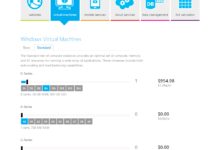
The Azure Pricing Calculator is the go-to starting point for anyone planning an Azure deployment. It allows users to build a virtual environment by selecting services and configuring specifications such as region, instance type, and usage duration.
- Real-time cost estimation as you add or modify services.
- Supports export to Excel for sharing with stakeholders.
- Integrates with Azure Reservations and Hybrid Benefit discounts.
This tool is ideal for pre-deployment planning and is a cornerstone of any azure price cal strategy.
2. Azure Total Cost of Ownership (TCO) Calculator
For organizations considering a migration from on-premises infrastructure to Azure, the TCO Calculator is indispensable. It compares the long-term costs of running workloads on-premises versus in the cloud.
- Factors in hardware, maintenance, power, and IT labor costs.
- Provides a detailed breakdown of potential savings over 5–7 years.
- Generates professional reports for executive presentations.
This tool is especially useful for CIOs and financial planners who need to justify cloud migration with hard numbers.
3. Azure Cost Management + Billing
Once your resources are live, the Azure Cost Management service becomes your primary azure price cal dashboard. It offers real-time visibility into spending, budget alerts, and cost analysis by resource, department, or tag.
- Set custom budgets with email and SMS alerts.
- Analyze spending trends with interactive charts and filters.
- Optimize costs using built-in recommendations (e.g., right-sizing VMs).
It integrates natively with Azure subscriptions and is included at no extra cost, making it a must-use for ongoing cost governance.
4. CloudZero
CloudZero is a third-party cloud cost intelligence platform that offers deep insights into Azure spending. Unlike basic calculators, CloudZero uses machine learning to attribute costs to specific teams, products, or features.
- Provides cost-per-customer or cost-per-feature analysis.
- Offers anomaly detection for unexpected spikes.
- Integrates with CI/CD pipelines for cost-aware development.
It’s particularly valuable for SaaS companies that need granular cost visibility across product lines.
5. CloudHealth by VMware
CloudHealth is a comprehensive cloud management platform that supports multi-cloud environments, including Azure. Its cost optimization engine helps identify underutilized resources and recommends savings opportunities.
- Automated rightsizing and shutdown of idle resources.
- Forecasting tools for future spending based on historical trends.
- Compliance and security monitoring alongside cost controls.
CloudHealth is ideal for enterprises managing complex, hybrid cloud infrastructures.
6. Azure Advisor
While not a standalone azure price cal tool, Azure Advisor plays a crucial role in cost optimization. It analyzes your resource configuration and provides personalized recommendations to improve performance, security, and cost efficiency.
- Suggests switching to reserved instances for long-running VMs.
- Recommends downgrading oversized databases or storage accounts.
- Provides step-by-step guidance to implement savings.
It’s a free, built-in service that should be reviewed monthly as part of your cost management routine.
7. ParkMyCloud
ParkMyCloud specializes in reducing cloud waste by automating the scheduling of non-production resources. For example, dev/test environments can be shut down overnight or on weekends, leading to significant savings.
- Automates on/off schedules for VMs, containers, and databases.
- Supports tagging and team-based cost allocation.
- Claims to reduce cloud costs by up to 65% for eligible workloads.
It’s a simple yet powerful tool for organizations with inconsistent usage patterns.
How to Use the Azure Pricing Calculator Effectively
The Azure Pricing Calculator is often the first stop in any azure price cal journey. However, many users underutilize its features. Here’s how to get the most out of it.
Step-by-Step Guide to Building a Cost Estimate
1. Visit the Azure Pricing Calculator and start with a blank estimate.
2. Search for services like Virtual Machines, Blob Storage, or Azure SQL Database.
3. Configure each service with realistic settings: region, instance size, storage type, and estimated monthly usage.
4. Use the ‘Save’ feature to name and store your estimate for future reference.
5. Share the link or export to Excel for collaboration.
Pro Tips for Accurate Azure Price Cal
- Always select the correct billing model (pay-as-you-go vs. reserved instances).
- Factor in data transfer costs, which are often overlooked.
- Use tags to group related services (e.g., ‘Production’, ‘Dev Environment’).
- Regularly update your estimates as your architecture evolves.
“A well-constructed Azure price cal can prevent budget overruns before they happen.”
Understanding Azure Pricing Models and Discounts
To truly master azure price cal, you must understand the underlying pricing models and available discounts. Azure offers several ways to reduce costs, but they require strategic planning.
Pay-As-You-Go vs. Reserved Instances
The default pay-as-you-go model charges you only for what you use, making it flexible but potentially expensive over time. Reserved Instances (RIs) allow you to commit to 1- or 3-year terms in exchange for significant discounts—up to 72% for some VM types.
- RIs are ideal for stable, predictable workloads (e.g., production databases).
- You can exchange or cancel RIs within limits.
- Reservations apply to specific regions, instance types, and OS types.
Spot Instances for Non-Critical Workloads
Azure Spot VMs offer unused capacity at up to 90% off standard rates. They can be evicted when demand rises, making them perfect for batch processing, CI/CD pipelines, or testing.
- Best for fault-tolerant, interruptible workloads.
- Can be combined with autoscaling groups for resilience.
- Requires application-level handling of eviction events.
Hybrid Benefit and Azure Savings Plan
The Azure Hybrid Benefit allows you to use existing Windows Server or SQL Server licenses with Software Assurance to reduce VM costs by up to 40%. Meanwhile, Azure Savings Plans offer flexible commitment-based discounts across multiple services.
- Savings Plans require a monthly spend commitment (e.g., $100+/month).
- Discounts apply automatically to eligible usage.
- More flexible than RIs but require consistent usage to maximize savings.
Common Mistakes in Azure Price Cal and How to Avoid Them
Even experienced cloud users make costly mistakes when estimating Azure expenses. Recognizing these pitfalls is key to an effective azure price cal strategy.
Ignoring Egress Data Transfer Costs
One of the most common oversights is failing to account for data egress fees—charges for transferring data out of Azure. While inbound data is free, outbound transfers (especially to the internet) can add up quickly.
- Use Azure CDN to reduce egress costs for content delivery.
- Architect applications to minimize cross-region data movement.
- Monitor egress usage in Cost Management reports.
Over-Provisioning Resources
It’s tempting to deploy large VMs “just to be safe,” but this leads to wasted spending. A 2022 study by Cloudability found that 35% of Azure VMs are oversized.
- Start small and scale up based on performance metrics.
- Use Azure Monitor to track CPU, memory, and disk usage.
- Leverage Azure Advisor’s right-sizing recommendations.
Forgetting About Long-Term Commitments
Many teams focus only on immediate costs and miss out on savings from reservations or Savings Plans. A proactive azure price cal approach includes evaluating long-term usage patterns.
- Forecast usage for the next 12–36 months.
- Use the Pricing Calculator to compare pay-as-you-go vs. reserved pricing.
- Start with partial reservations to test savings impact.
Best Practices for Ongoing Azure Cost Optimization
Cost management doesn’t end with the initial azure price cal. It’s an ongoing process that requires discipline, automation, and cross-team collaboration.
Implement Tagging and Cost Allocation
Tags are metadata labels (e.g., ‘Department: Marketing’, ‘Project: CRM’) that allow you to track and allocate costs. Without them, it’s nearly impossible to determine who’s spending what.
- Establish a company-wide tagging policy.
- Enforce tagging through Azure Policy rules.
- Use tags in Cost Management reports to generate departmental budgets.
Set Up Budgets and Alerts
Proactive monitoring prevents surprises. Azure allows you to create budgets with thresholds (e.g., 80%, 100% of limit) and send alerts via email or webhook.
- Create separate budgets for production, development, and sandbox environments.
- Integrate alerts with Slack or Microsoft Teams for real-time visibility.
- Review budget performance monthly with finance and engineering teams.
Automate Cost-Saving Actions
Manual cost optimization doesn’t scale. Use automation tools like Azure Automation, Logic Apps, or third-party platforms to shut down idle resources, resize underutilized VMs, or enforce policy compliance.
- Schedule nightly shutdowns for dev/test VMs.
- Automate snapshot retention and deletion policies.
- Use Azure Policy to block unauthorized high-cost services.
Real-World Azure Price Cal Case Studies
Let’s look at how real organizations have used azure price cal tools to achieve measurable savings.
Case Study 1: Mid-Sized SaaS Company Reduces Costs by 45%
A software-as-a-service company was spending $50,000/month on Azure but had no visibility into which product lines were driving costs. By implementing CloudZero and integrating it with their CI/CD pipeline, they identified that their legacy reporting module was consuming 40% of resources despite low usage. After refactoring and rightsizing, they reduced monthly costs to $27,500—a 45% savings.
Case Study 2: Enterprise Migration with TCO Calculator
A global manufacturing firm used the Azure TCO Calculator to evaluate migrating 200 on-premises servers to Azure. The tool projected a 3-year savings of $1.2 million by eliminating hardware refreshes, data center leases, and IT maintenance. After migration, actual savings reached $1.4 million due to additional optimizations identified during the process.
Case Study 3: Startup Avoids Budget Overrun with Proactive Planning
A fast-growing startup used the Azure Pricing Calculator to model their expected growth over 18 months. They discovered that their initial architecture would cost $200,000 annually. By switching to reserved instances and optimizing storage tiers, they reduced the estimate to $110,000—freeing up capital for product development.
Future Trends in Azure Price Cal and Cost Management
The landscape of azure price cal is evolving rapidly. As AI and machine learning become more integrated into cloud platforms, we can expect smarter, more predictive cost management tools.
AI-Powered Cost Forecasting
Microsoft is investing heavily in AI-driven insights within Azure Cost Management. Future updates may include predictive analytics that forecast cost spikes based on usage patterns, seasonal trends, or upcoming deployments.
- Automated anomaly detection with root cause analysis.
- Integration with DevOps pipelines to estimate cost impact of code changes.
- AI recommendations for optimal reservation purchases.
FinOps Integration
The FinOps (Financial Operations) movement is gaining traction, emphasizing collaboration between finance, engineering, and operations teams. Tools that support FinOps principles—like cost transparency, accountability, and agility—will become standard in azure price cal workflows.
- Real-time cost dashboards accessible to non-technical stakeholders.
- Chargeback and showback models for internal billing.
- Integration with ERP and accounting systems.
Multi-Cloud Cost Management
As organizations adopt multi-cloud strategies, the need for unified azure price cal tools that span AWS, Google Cloud, and Azure will grow. Platforms like CloudHealth and CloudZero are already leading this trend, offering consolidated views across providers.
- Single pane of glass for all cloud spending.
- Cross-cloud optimization recommendations.
- Centralized policy enforcement.
What is the best tool for azure price cal?
The best tool depends on your needs. For pre-deployment planning, use the Azure Pricing Calculator. For ongoing cost management, Azure Cost Management + Billing is essential. For advanced analytics, consider third-party tools like CloudZero or CloudHealth.
How accurate is the Azure pricing calculator?
The Azure Pricing Calculator is highly accurate for known configurations and standard usage patterns. However, it doesn’t account for unexpected usage spikes, egress fees from user behavior, or dynamic scaling. Always treat it as an estimate and monitor actual costs in Azure Cost Management.
Can I calculate TCO for migrating to Azure?
Yes. Microsoft’s TCO Calculator is specifically designed for this purpose. It compares on-premises costs (hardware, power, labor) with Azure cloud costs and provides a detailed report showing potential savings.
How can I reduce my Azure bill?
You can reduce your Azure bill by: using reserved instances, rightsizing underutilized resources, eliminating idle VMs, leveraging Spot VMs for non-critical workloads, enabling auto-shutdown, and using Azure Hybrid Benefit for licensed software.
Is Azure Cost Management free?
Yes, Azure Cost Management + Billing is included at no additional cost for all Azure customers. It provides budgeting, cost analysis, and optimization recommendations directly in the Azure portal.
Mastering azure price cal is no longer optional—it’s a strategic imperative. With the right tools, practices, and mindset, you can transform cloud spending from a cost center into a lever for innovation and growth. Whether you’re just starting your Azure journey or optimizing a mature environment, the principles outlined in this guide will help you maintain control, maximize value, and avoid costly surprises. The future of cloud cost management is intelligent, automated, and collaborative—and it starts with a solid azure price cal foundation.
Recommended for you 👇
Further Reading: